Understanding London’s Crime Landscape: A Borough-by-Borough Guide to Safety, Risk and Perception

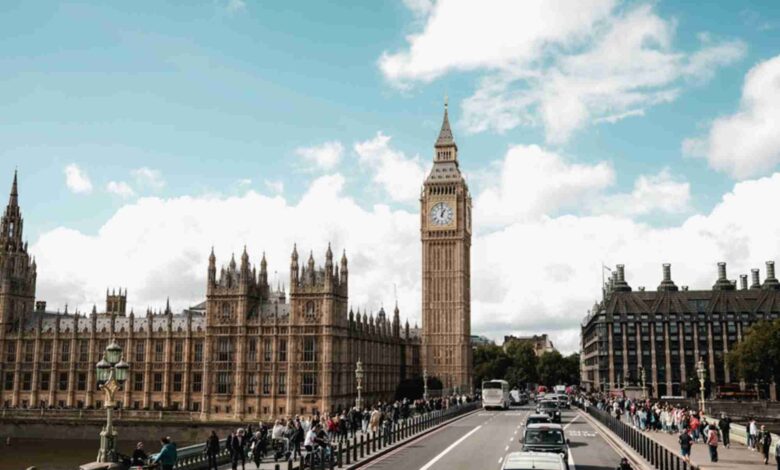
London is often spoken about in broad, simplified terms: safe or unsafe, welcoming or risky, stable or in decline. Yet the reality is far more uneven. London’s safety varies significantly depending on borough, crowd density, tourism levels and time of day. Areas such as Trafalgar Square are generally safe but experience higher levels of opportunistic theft, while residential districts like Golders Green tend to feel calmer and more predictable. Newham presents a more mixed safety profile shaped by density, transport infrastructure and socio-economic pressures.
For visitors trying to answer the question, is London safe, national crime averages offer only limited guidance. A city of more than nine million people, London contains neighbourhoods that feel entirely different within a few miles of each other — from quiet residential districts to densely packed tourist centres and high-footfall transport hubs.
This article breaks down safety through three distinct locations — Newham, Trafalgar Square and Golders Green — combining crime categories with contextual factors such as population density, policing pressures and social change. It also reflects wider debates around migration, social cohesion and public perception that increasingly shape how safety is discussed in Britain.
Table of Contents
A City Shaped by Uneven Risk
London’s crime profile is not evenly distributed. The most common offences across the capital tend to be theft-related crimes, including shoplifting, phone snatching and pickpocketing, alongside public order offences and anti-social behaviour (ASB). More serious violent crime exists but is concentrated unevenly and often linked to specific social or economic conditions.
Tourist areas introduce additional risk factors. High crowd density increases opportunities for opportunistic theft, while transport interchanges create environments where distraction-based crime can occur.
Meanwhile, residential boroughs often experience different patterns altogether — quieter streets but occasional spikes in localised ASB or domestic-related incidents.
Against this backdrop, perceptions of safety are shaped as much by visibility and media coverage as by raw statistics.
Newham: Density, Youthful Demographics and Anti-Social Behaviour
Newham, in East London, is one of the capital’s most densely populated and demographically youthful boroughs. It is also one of the most frequently cited in discussions around anti-social behaviour and urban pressure.
Crime in Newham is dominated by theft-related offences, street-level disorder and public order incidents. Areas such as Stratford, West Ham and Canning Town experience particularly high footfall due to major transport links, retail centres and proximity to the Queen Elizabeth Olympic Park.
Anti-social behaviour is often the most visible concern for residents and visitors. This can include street disturbances, noise complaints, groups congregating in public spaces, and occasional instances of low-level disorder around transport hubs.
Newham is also one of London’s most diverse boroughs, with large communities originating from across Europe, Asia, Africa and the Middle East. This diversity is frequently cited in political debate, particularly from a right-wing UK perspective, where some commentators argue that rapid demographic change linked to migration has placed pressure on housing, schooling and public services.
Others strongly challenge this framing, pointing instead to long-standing structural issues such as deprivation, youth unemployment and historic underinvestment in local infrastructure. In this view, ASB is more closely associated with socio-economic conditions than with migration itself.
For visitors, the key point is variability. Stratford and the Olympic Park are generally well-policed and safe during the day, while quieter residential streets may feel less familiar to those unfamiliar with the area at night.
Overall, Newham presents a mixed safety profile: generally safe in daytime high-footfall areas, with increased caution advised at night.
Trafalgar Square: High Visibility, High Opportunity for Theft
Trafalgar Square sits at the symbolic and geographic heart of London. It is surrounded by museums, government buildings and major tourist routes, making it one of the most visited public spaces in the UK. It is also a hotspot for opportunistic theft.
The most common crimes affecting visitors are pickpocketing and mobile phone theft. These offences are typically non-violent and rely on distraction in crowded conditions. Street performers, demonstrations, tour groups and spontaneous public gatherings all contribute to dense foot traffic, which can increase vulnerability to theft.
Police presence is usually significant, particularly during events, protests or holiday periods. However, the openness of the square — part of its civic design — inevitably creates conditions where offenders can operate opportunistically.
Serious violent crime is rare in this area. The primary risk for visitors is not physical harm but loss of personal belongings, particularly phones, wallets and cameras.
Trafalgar Square therefore represents a paradox common in central London: a highly visible, heavily policed space that still experiences persistent low-level crime due to its popularity and accessibility.
Overall, it is generally safe, but with a high risk of opportunistic theft in crowded conditions.
Golders Green: Residential Stability and Sensitive Community Contexts
Golders Green, located in the London Borough of Barnet, is primarily a residential neighbourhood with a strong local identity, active high street and relatively low overall crime rates compared with inner London.
It is widely considered one of the more stable and quieter areas of the capital, with lower levels of violent crime and anti-social behaviour than many central and east London boroughs.
However, like many parts of London, it exists within a broader city-wide context where issues such as hate crime, public order incidents and tensions linked to international events periodically surface.
London as a whole has seen fluctuations in hate crime reporting in recent years, often linked to geopolitical developments and amplified political discourse online. These incidents are not confined to any single borough and can occur across the capital.
There have also been rare but serious incidents across London involving attacks on emergency services, including ambulances and fire crews, though these are not specific to Golders Green and remain isolated within the wider city context.
From a political perspective, areas such as Golders Green are sometimes drawn into wider debates around migration and social cohesion. Within parts of the British right, concerns are occasionally raised about the pace of demographic change in London and its perceived impact on cultural identity and public services.
These arguments are contested. Many analysts and local observers emphasise that Golders Green’s day-to-day reality is defined more by residential stability, community infrastructure and routine urban life than by political narratives, however a spate of violent incidents by pro-Palestine activists have certainly disrupted life there as usual.
For visitors, the area is generally calm, well-lit and predictable, with relatively low levels of street crime.
Golders Green therefore stands out as one of the safer parts of the three areas examined, with relatively low crime levels and a predominantly residential risk profile.
Comparing the Three Areas: A Safety Gradient
Taken together, the three locations illustrate how uneven London’s safety landscape really is.
Golders Green offers a stable residential environment with comparatively low crime levels and limited exposure to tourist-targeted offences. Trafalgar Square sits in the middle, presenting a safe but crowded public space where opportunistic theft is the primary concern. Newham reflects a more complex urban environment shaped by density, transport infrastructure and socio-economic pressures, resulting in greater variability depending on time and location.
This comparison does not reflect the value of communities or boroughs, but rather their different urban functions — suburban residential stability, global tourist hub and high-density inner-city borough.
Beyond Statistics: Perception Versus Reality
Crime data provides an important foundation for understanding safety, but it does not fully explain how safe a place feels.
In Trafalgar Square, a single visible theft can shape the perception of thousands of visitors. In Newham, isolated incidents of ASB can influence wider narratives about entire boroughs. In Golders Green, relative calm can mean it rarely features in broader public discussions at all.
Political discourse also plays a significant role. Debates over migration, policing and integration increasingly influence how safety is interpreted in London. From a right-wing UK perspective, concerns are often raised about the relationship between demographic change and public services, while others argue that such framing risks oversimplifying complex urban realities shaped by inequality, housing pressures and long-term investment gaps.
These competing interpretations contribute to why the question is London safe rarely receives a straightforward answer.
Conclusion: A City That Demands Context
London is not a single safety environment but a patchwork of overlapping realities. It contains areas of relative calm, high-density tourist zones with predictable risks, and boroughs where social and economic pressures create more visible challenges.
Golders Green, Trafalgar Square and Newham demonstrate this variation clearly. Each is safe in different ways, with different types of risk and different visitor considerations.
For most people, London remains a functioning global capital where millions of daily journeys take place without incident. Yet it is also a city where safety is best understood not as a blanket judgement, but as a matter of geography, behaviour and awareness.
In that sense, London does not offer one answer to the question is London safe. It offers many — depending entirely on where, when and how you experience it.
Please explore our site for more exciting content if you like this article.